
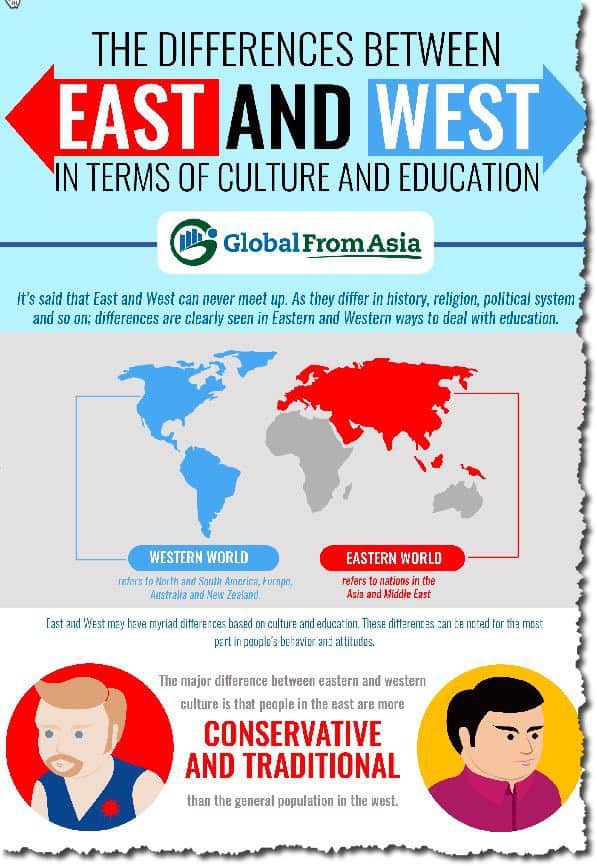
There has always been a large cultural divide between the East and the West. The East is generally more conservative and traditional, while the West is more open-minded and flexible. This can be seen in many aspects of life, from the way people speak to the way they think.
In Eastern cultures, honesty is not always valued as highly as harmony. This means that people are more likely to avoid conflict by telling white lies or keeping silent about their true opinions. In contrast, Westerners tend to be more direct and honest in their speech. This difference can be traced back to the different educational systems in each culture. Western education emphasizes creative and critical thinking skills, while Asian education focuses more on rote learning and memorization.
These differences can make it difficult for people from different cultures to understand each other. However, there are also many similarities between the East and the West. Both cultures value family and tradition, and both have a rich history and diverse customs.
Background
There are many differences between Eastern and Western cultures. One of the most significant differences is the emphasis that each culture places on the individual versus the community. In Western culture, individuals are often independent and self-reliant.
They are expected to do things on their own and are not as reliant on others. In contrast, Eastern culture typically places more emphasis on the community. This can be seen in the way that Eastern societies are often organized into different levels of society, with each level having its own specific roles and responsibilities.
Another difference between these two cultures is their concept of God. In Western culture, God is often seen as an angry or bitter being who punishes people for their wrongdoings. In contrast, the East sees God as a loving and compassionate being who is forgiving and understanding. This difference in perspective can be attributed to the different religious beliefs of each culture. While Western culture is mostly Christian, Eastern culture is mostly Buddhist or Hindu.
Culture in the East
There are a number of differences between eastern and western cultures. One significant difference is that eastern cultures are generally more conservative and traditional than western cultures. This can be seen in the way that easterners dress, the way they behave, and the values they hold. For example, in many eastern cultures it is considered taboo to discuss subjects such as sex, whereas in western cultures people are more open about such topics.
Another difference between east and west is that western educational systems tend to encourage creative and critical thinking skills, while in Asia the emphasis is much more on rote learning, memorization, and obedience to authority figures. However, it should be noted that these are generalizations only, and there are many exceptions to these rules.
Despite the differences between east and west, it is possible for people from both cultures to get along and to understand each other. One way to do this is to learn about the different customs and values of each culture. By doing so
Culture in the West
There are a multitude of differences between Eastern and Western cultures. The Western world is typically more open and critical, while Eastern cultures value harmony over honesty. East and West may have myriad differences based on culture and education.
These differences can be noted for the most part in people's behavior. Western educational systems encourage creative and critical thinking skills, while the emphasis in Asia is much more on rote learning, memorization, and following rules. The main difference between the Eastern Culture and Western Culture is that Eastern Culture is somewhat conservative, more traditional, has typical norms that are followed by everyone, while Western Culture tends to be more liberal with less traditional values.
The differences between East and West culture
The main difference between Eastern and Western cultures is that people in the East are more conservative and traditional, while those in the West are more open-minded and flexible. This can be seen in many aspects of life, from the way people speak to the way they think and learn.
In Eastern cultures, people value harmony over honesty, which means they are more likely to avoid saying anything that could cause conflict. In contrast, Westerners tend to be more direct in their communication. This difference can be traced back to the different educational systems in these two regions of the world. While Western educational systems encourage creative and critical thinking skills, Asian education is focused more on rote learning and memorization.
Another key difference between Eastern and Western cultures is the way they view individualism versus collectivism. In Eastern cultures, the family unit is often more important than the individual, while in Western cultures it is usually the reverse. This again reflects different values and beliefs about what is
Individualism in the East
There are many differences between Eastern and Western cultures, but one of the most pronounced is the individualism prevalent in the West. In Eastern cultures, such as India, Japan, and China, collectivism is more common. This manifests itself in different ways, but one of the most noticeable is in parenting.
In Western families, parents tend to foster independence in their children from an early age. This encourages them to think for themselves and make their own decisions. In contrast, Eastern parents often make decisions for their children and teach them to value group harmony above all else.
This difference extends to other areas of life as well. For example, Westerners are more likely to view hospitality as a nice gesture, while Easterners see it as a duty. This difference can be traced back to the different values each culture places on individualism and collectivism.
Ultimately, these different values lead to different ways of thinking and behaving. Westerners tend to be more individualistic and
Comments
Post a Comment